


The changes to the VMware/Broadcom ecosystem’s commercial model, licensing, and pricing have marked a turning point for the virtualization and digital workplace market. Businesses, public sector organizations, cloud providers, and systems integrators are reassessing their technology strategies in response to rising recurring costs and the need to reduce dependence on a single vendor.
This new landscape has accelerated a discussion that many organizations had already begun: how to maintain control over their critical infrastructure, optimize total cost of ownership (TCO), and gain the flexibility needed to adapt to future business requirements without being locked into closed ecosystems.
Virtual Cable believes this new environment represents an opportunity to reassess virtualization strategies using a rigorous, data-driven methodology.
“It’s not about migrating for the sake of migrating, but about making decisions based on real data. Before renewing contracts or modifying architectures, organizations need a clear understanding of actual resource utilization, contract renewal dates, total cost of ownership, and the business value each platform currently delivers,” says Félix Casado, CEO of Virtual Cable.
Comprehensive Assessment for Better Decision-Making
A complete infrastructure inventory and detailed cost analysis help organizations identify which systems continue to meet current business needs and where an alternative solution could deliver greater efficiency, scalability, security, or cost control. This assessment helps avoid reactive decisions that could create new dependencies or increase costs over the medium term.
Virtual Cable believes that adopting a new solution should never mean replacing one dependency with another. That’s why the company advocates for open, interoperable, multi-platform technologies that preserve long-term freedom of choice and allow organizations to combine different vendors, infrastructures, and services based on their specific business requirements.
A Gradual Transition Through Hybrid Architectures
Change doesn’t have to happen overnight. A phased migration strategy, supported by proofs of concept and pilot projects, allows organizations to validate technical compatibility, real-world performance, user experience, and business impact before scaling the deployment.
This approach enables organizations to keep mission-critical workloads running on their existing platforms while gradually migrating specific user groups, departments, or use cases to new environments. This technology coexistence strategy maximizes the return on previous investments while minimizing operational risk.
UDS Enterprise: A Flexible Platform for Strategic IT Evolution
UDS Enterprise is positioned as a flexible, multi-technology platform designed to support organizations throughout this type of transition. It provides a comprehensive solution for desktop virtualization (VDI), application virtualization (vApp), DaaS services, and secure remote access to physical PCs, enabling organizations to centrally and efficiently manage thousands of digital workspaces.
Its open architecture is compatible with multiple hypervisors, cloud providers, and hybrid environments. This interoperability makes it possible to design tailored infrastructures that align with each organization’s technical, operational, and business requirements while avoiding new vendor dependencies and future lock-in.
As the only VDI solution certified under Spain’s National Security Framework (ENS), UDS Enterprise is particularly well suited to organizations that require the highest levels of security, control, and regulatory compliance.
“The real challenge is not simply reducing costs—it’s regaining technological sovereignty and the ability to evolve. UDS Enterprise enables organizations to move forward in a controlled way, preserving their existing investments while gaining greater flexibility, control, and efficiency. The key is to avoid disruptive change and build a more open and sustainable technology strategy,” says Félix Casado.
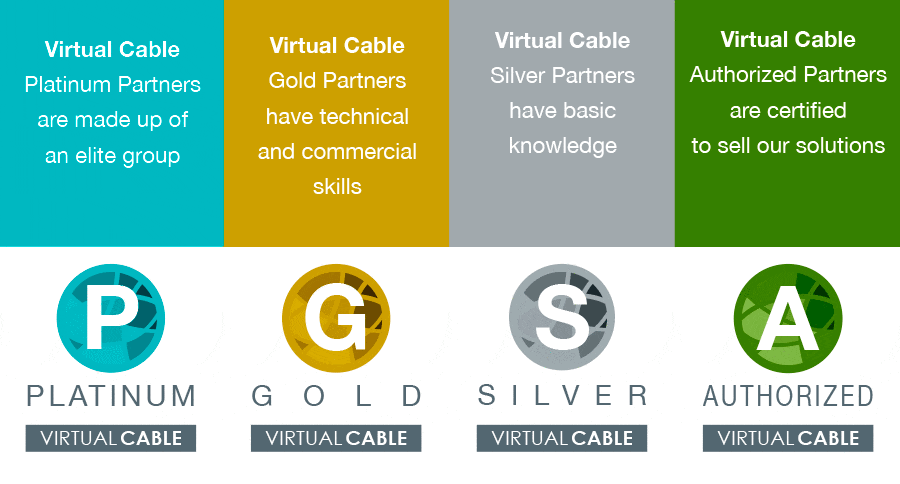
Throughout this process, channel partners and technology partners play a critical role. Their in-depth understanding of each customer’s environment enables them to accurately assess alternatives, design the optimal architecture, successfully execute pilot projects, and define a migration plan tailored to each organization’s specific needs.
Every contract renewal can therefore become a strategic opportunity to strengthen technological independence, optimize operational costs, and build a more flexible, secure, and future-ready digital workplace.
Frequently Asked Questions About Virtualization Strategies and the Digital Workplace
Why are organizations reassessing their virtualization strategies?
The changes to the VMware/Broadcom ecosystem’s commercial model, licensing, and pricing have prompted businesses, public sector organizations, cloud providers, and systems integrators to reassess their technology strategies, particularly in response to rising recurring costs and the need to reduce dependence on a single vendor.
What should organizations evaluate before changing their virtualization architecture?
Before renewing contracts or modifying their architecture, organizations should analyze actual resource utilization, contract renewal dates, total cost of ownership (TCO), and the business value each platform currently delivers.
Why should virtualization migrations be carried out gradually?
A phased migration strategy, supported by proofs of concept and pilot projects, allows organizations to validate technical compatibility, real-world performance, user experience, and business impact before scaling the deployment.
What role does technology coexistence play in these projects?
Technology coexistence enables organizations to maintain mission-critical environments on their existing platforms while progressively migrating specific user groups, departments, or use cases to new solutions, reducing operational risk throughout the transition.
How does UDS Enterprise support a flexible IT evolution strategy?
UDS Enterprise enables organizations to manage virtual desktops, applications, DaaS services, and secure remote access to physical PCs from a flexible, multi-technology platform compatible with multiple hypervisors, cloud providers, and hybrid environments.
What role do technology partners play during these transitions?
Channel partners and technology partners help organizations evaluate alternatives, design the optimal architecture, execute successful pilot projects, and define a migration plan tailored to their specific business requirements.






0 Comments